Summary

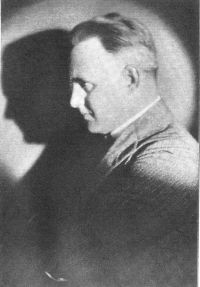
Portrait of Clarence G. Badger Clarence G. Badger The Point of Attack, or, How to Start the Photoplay (1920)

The novice may attach little or no importance to this initial move in the creation of a photoplay, but study and the experience that comes with practical analysis and the actual work of plot-building will lend emphasis to the statement that no single consideration demands more careful and thoughtful attention. Let us assume that when the drop-curtain rises in a motion picture theatre and the shadow action commences, the audience is looking, not at figures projected upon a screen, but through a window into the private lives of fictitious characters around whom the plot is woven.
Source: Wikisource

Portrait of Clarence G. Badger Clarence G. Badger The Point of Attack, or, How to Start the Photoplay (1920)

In selecting a point of attack or beginning, the photoplaywright is confronted with the task of skillfully forming a link between the outside occurrences that have gone before and those which are witnessed by the audience as integral parts of the photoplay itself. He must decide at just what time and place and under exactly what circumstances the audience may commence snooping into the lives of the characters whose dramatic relations carry them through smiles, tears and suspense for an indefinite period.
Source: Wikisource

Portrait of Clarence G. Badger Clarence G. Badger The Point of Attack, or, How to Start the Photoplay (1920)

Each may turn back to happenings of years before, which may be more or less interesting, but which must be swept aside to make room for what is vital and necessary. Or each may in his haste plunge incoherently into the midst of the actual scene of the crime and omit information that is important in showing motive and connecting a logical sequence of events leading up to the climax. Each must thoughtfully decide upon a point of attack—a beginning.
Source: Wikisource

Get perspective with Kwize: daily news enlightened by great literature