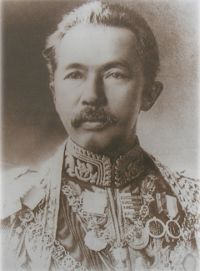
Damrong Rajanubhab

Damrong Rajanubhab

Summary

Portrait of Damrong Rajanubhab Damrong Rajanubhab Angkor From a Siamese Point of View (1925)

In Bangkok to-day, in what one may call a period at the height of prosperity, we are nevertheless unable to keep even in fair condition all our sanctuaries — even though they are far fewer in number and smaller in every way than those of Angkor. As I have shown above, when explaining the apparent changes in the religion of these monuments, there was need already, while the Khmer power was still flourishing, of repairs.
Source: Wikisource

Portrait of Damrong Rajanubhab Damrong Rajanubhab Angkor From a Siamese Point of View (1925)

Angkor Wat was built in the later period of Khmer civilisation, about the 12th century A.D. From an architectural point of view, it cannot be said that the builders of this group of sanctuaries invented anything new; on the other hand you can see there adaptations from various other older monuments. And yet Angkor Wat is extremely imposing. The style, even though an adaptation, is magnified in proportion and the whole produces a splendid effect.
Of Buddhist sanctuaries there exist several considerable monuments, but none as yet so well cleared and restored as Bayon and Angkor Wat.
Source: Wikisource

Portrait of Damrong Rajanubhab Damrong Rajanubhab Angkor From a Siamese Point of View (1925)

A king would resort to Buddhism for spiritual matters, whilst he would strictly follow the precepts of Hinduism in affairs temporal, such as in Coronation Ceremonies, or those connected with Swinging and the Commencement of Ploughing, the like of which you have most likely seen here year by year. In the Hindu monument of Bayon, I noticed a statue of a Bodhisattva, and in Buddhist places were also to be found statues of Vishnu riding on his Garuda, in just the same way as you can see them on the gable of the Chapel of the Emerald Buddha in the Grand Palace at Bangkok.
Source: Wikisource

Get perspective with Kwize: daily news enlightened by great literature