Summary

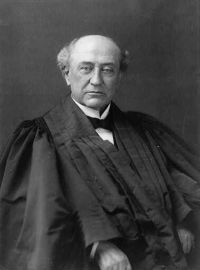
Portrait of David Josiah Brewer David Josiah Brewer Austin v. Tennessee/Dissent Brewer…

The power of Congress to regulate commerce between the states being, as we have seen, supreme, its failure to impose any restrictions or regulations is to be taken as a declaration that, in its judgment, such commerce shall be free. There is no necessity of an affirmative declaration on its part, for, as it alone has power to restrict or prescribe regulations, its failure to do so leaves the commerce unburdened.
Source: Wikisource

Portrait of David Josiah Brewer David Josiah Brewer Austin v. Tennessee/Dissent Brewer…

Commerce is intercourse; one of its most ordinary ingredients is traffic. It is inconceivable that the power to authorize this traffic, when given in the most comprehensive terms, with the intent that its efficacy should be complete, should cease at the point when its continuance is indispensable to its value. To what purpose should the power to allow importation be given, unaccompanied with the power to authorize a sale of the thing imported? Sale is the object of importation, and is an essential ingredient of that intercourse, of which importation constitutes a part.
Source: Wikisource

Portrait of David Josiah Brewer David Josiah Brewer Austin v. Tennessee/Dissent Brewer…

Could not Tennessee rightfully contend that it was a matter affecting one of its large industries, and which was likely to be destroyed by such adverse legislation?
It is undoubtedly true that the police power is not by the Constitution delegated to Congress. It may, therefore, under article 10 of the Amendments, be regarded as reserved to the states respectively, or to the people, but it is equally clear that no power which is impliedly reserved to the states can limit or detract from the full scope of any power expressly delegated to the nation, to be exercised by Congress.
Source: Wikisource

Get perspective with Kwize: daily news enlightened by great literature