Summary

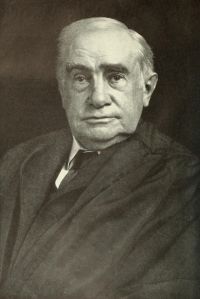
Portrait of Henry Billings Brown Henry Billings Brown Austin v. Tennessee — Opinion of the Court

If Congress have power to declare what property may and what may not be brought into one state from another state, then the action of a state by which certain articles, not unreasonably deemed injurious to health, were excluded from its markets, should stand until Congress legislated upon the subject. If Congress possesses no such power, it is because the framers of the Constitution never intended that the mere grant of power to regulate commerce should override the power reserved by the states to pass laws that had substantial relations to the health of their people.
Source: Wikisource

Portrait of Henry Billings Brown Henry Billings Brown Austin v. Tennessee — Opinion of the Court

There is doubtless fair ground for dispute as to whether the use of cigarettes is not hurtful to the community, and therefore it would be competent for a state, with reference to its own people, to declare, under penalties, that cigarettes should not be manufactured within its limits. No one could say that such legislation trenched upon the liberty of the citizen by preventing him from pursuing a lawful business.
Source: Wikisource

Portrait of Henry Billings Brown Henry Billings Brown Austin v. Tennessee — Opinion of the Court

Congress, too, has recognized tobacco in its various forms as a legitimate article of commerce by requiring licenses to be taken for its manufacture and sale, imposing a revenue tax upon each package of cigarettes put upon the market, and by making express regulations for their manufacture and sale, their exportation and importation. Cigarettes are but one of the numerous manufactures of tobacco, and we cannot take judicial notice of the fact that it is more noxious in this form than in any other.
Source: Wikisource

Get perspective with Kwize: daily news enlightened by great literature