Summary

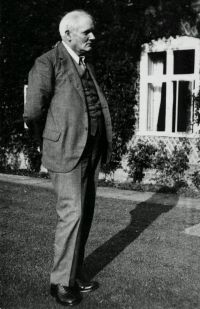
Portrait of Donald Francis Tovey Donald Francis Tovey 1911 Encyclopædia Britannica, Volume 27… (1911)

There is, no doubt, great scope for a variation-form which is neither melodic nor anatomic, and we have not a word to say against the legitimacy of many forms of effective modern fantasia-variations; but the fact remains that it is very hazardous to talk of an “advance” in the variation-form, when even the best fantasia-variations are not only unconnected with any classical type but evidently unable to get nearly as far from either the melody or the harmony of their theme as the 25th of Bach’s “Goldberg” variations or many variations in the earliest sets by Beethoven.
Source: Wikisource

Portrait of Donald Francis Tovey Donald Francis Tovey 1911 Encyclopædia Britannica, Volume 27… (1911)

But Beethoven’s highest art in variation-form is to be found in his independent sets of variations. In some of the earliest of these, notably in the 24 on a theme by Righini (which was his chief bravura performance as a young pianoforte player) , he far transcends not only the earlier or sonata-form idea of melodic variations, but fuses their resources with those of the ground-bass, and adds to them his own unparalleled grasp of rhythmic organization.. Beethoven is the first composer who can be said to have discovered that a theme consists not only of melody and harmony but of rhythm and form.
Source: Wikisource

Portrait of Donald Francis Tovey Donald Francis Tovey 1911 Encyclopædia Britannica, Volume 27… (1911)

In sonata works, Beethoven's examples of the normal variation form based on a single theme are as wonderful as may be expected from him; but nothing is more significant than his strict adherence in sonata works to the melodic principle of variation. He uses the form as an unsurpassable means of obtaining repose in slow movements.
Source: Wikisource

Get perspective with Kwize: daily news enlightened by great literature