Summary

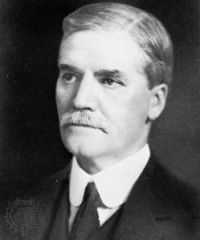
Portrait of Dugald Clerk Dugald Clerk 1911 Encyclopædia Britannica, Volume 11… (1911)

The governing of large gas engines, too, is now effected so as to keep up continuity of impulses by the method either of throttling the charge inlet or by varying the point of admission of gas alone or air and gas mixed.
It may be said, indeed, without exaggeration, that the whole world is now alive to the possibilities of the internal-combustion motor, and that progress will be more and more rapid. This motor has almost fulfilled the expectations of those engineers who have devoted a large part of their lives to its study and advancement.
Source: Wikisource

Portrait of Dugald Clerk Dugald Clerk 1911 Encyclopædia Britannica, Volume 11… (1911)

GAS ENGINE. A gas engine is a heat engine in which the working fluid is atmospheric air and the fuel an inflammable gas. It differs from a hot-air or a steam engine in that the heat is given to the working fluid by combustion within the motive power cylinder. In most gas engines—in fact, in all those at present on the market—the working fluid and the fuel that supplies it with heat are mixed with each other before the combustion of the fuel.
Source: Wikisource

Portrait of Dugald Clerk Dugald Clerk 1911 Encyclopædia Britannica, Volume 11… (1911)

Thus in all three symmetrical cycles of constant temperature, constant pressure and constant volume the thermal efficiency depends only on the ratio of the maximum volume before compression to the volume after compression; and, given this ratio, called 1/r, which does not depend in any way upon temperature determinations but only upon the construction and valve-setting of the engine, we have a means of settling the ideal efficiency proper for the particular engine. Any desired ideal efficiency may be obtained from any of the cycles by selecting a suitable compression ratio.
Source: Wikisource

Get perspective with Kwize: daily news enlightened by great literature