Summary

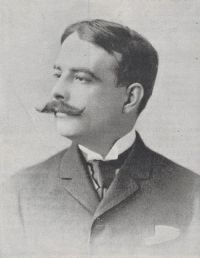
Portrait of Edgar Saltus Edgar Saltus Imperial Purple — Chapter VII (1892)

It requires little acumen to see that when Rome permitted herself to be blackmailed the end was near.
For the time being, however, there was peace, and in its interest Hadrian set out on that unequalled journey over a land that was his. Had fate relented, Trajan could have made a wider one still. But in Trajan was the soldier merely, when he journeyed it was with the sword. In Hadrian was the dilettante, the erudite too; he travelled not to conquer, but to learn, to satisfy an insatiable curiosity, for self-improvement, for glory too.
Source: Wikisource

Portrait of Edgar Saltus Edgar Saltus Imperial Purple — Chapter VII (1892)

In the ascending spiral is the new revolt, the attempt to assassinate Trajan, the capture of the conspirators, the advance of the legions, the retreat of the Dacians, burning their cities as they go, carrying their wounded and their women with them, and at last pressing about a huge cauldron that is filled with poison, fighting among themselves for a cup of the brew, and rolling on the ground in the convulsions of death.
Source: Wikisource

Portrait of Edgar Saltus Edgar Saltus Imperial Purple — Chapter VII (1892)

Many years later—a century or two, to be exact—a Persian satrap loitered in a forum of Rome. "It is here," he declared, "I am tempted to forget that man is mortal."
He had passed beneath a triumphal arch; before him was a glittering square, grandiose, yet severe; a stretch of temples and basilicas, in which masterpieces felt at home—the Forum of Trajan, the compliment of a nation to a prince. Dominating it was a column, in whose thick spirals you read to-day the one reliable chronicle of the Dacian campaign. Was not Gautier well advised when he said only art endures?
Source: Wikisource

Get perspective with Kwize: daily news enlightened by great literature