Summary

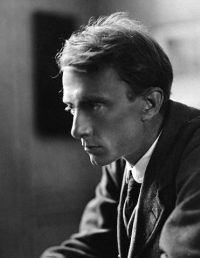
Portrait of Edward Thomas Edward Thomas George Borrow: The Man and His Books

The ordinary man probably recalls all that is of importance in his past life, though he may not like to think so, but a man with a memory like Borrow’s or with a supply of diaries like Sir Mountstuart Grant Duff’s may well ask, “What is truth?” as Borrow often did. The facts may convey a false impression which an omission or a positive “lie” may correct.
Just at first, as has been seen, a month after his Christmas wine with Mr Petulengro, Borrow saw his life as a drama, perhaps as a melodrama, full of Gypsies, jockeys and horses, wild men of many lands and several murderers.
Source: Gutenberg

Portrait of Edward Thomas Edward Thomas George Borrow: The Man and His Books

More than most authors Borrow appears greater than his books, though he is their offspring. It is one of his great achievements to have made his books bring forth this lusty and mysterious figure which moves to and fro in all of them, worthy of the finest scenes and making the duller ones acceptable. He is not greater than his books in the sense that he is greater than the sum of them: as a writer he made the most out of his life.
Source: Gutenberg

Portrait of Edward Thomas Edward Thomas George Borrow: The Man and His Books

The picture of the Gitana of Seville hands on some of its own power to the quieter pages, and at length, with a score of other achievements of the same solid kind, kindles well-nigh every part of the shapeless book. I shall quote it at length:
“If there be one being in the world who, more than another, deserves the title of sorceress (and where do you find a word of greater romance and more thrilling interest?) , it is the Gypsy female in the prime and vigour of her age and ripeness of her understanding—the Gipsy wife, the mother of two or three children.
Source: Gutenberg

Get perspective with Kwize: daily news enlightened by great literature