Summary

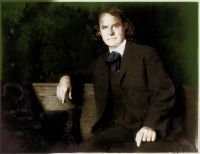
Portrait of Elbert Hubbard Elbert Hubbard,  Little Journeys to the Homes of Great Teachers

“ Said Hypatia, "Fables should be taught as fables, myths as myths, and miracles as poetic fancies. To teach superstitions as truths is a most terrible thing. The child-mind accepts and believes them, and only through great pain and perhaps tragedy can he be in after-years relieved of them. In fact, men will fight for a superstition quite as quickly as for a living truth - often more so, since a superstition is so intangible you can not get at it to refute it, but truth is a point of view, and so is changeable." ”
Source: Wikisource

Portrait of Elbert Hubbard Elbert Hubbard,  Little Journeys to the Homes of Great Teachers

“ Hypatia might have lived yesterday, and her death at the hands of a mob was an accident that might have occurred in Boston, where a respectable company once threw a rope around the neck of a good man and ran him through streets supposed to be sacred to liberty and free speech.
A mob is made up of cotton waste, saturated with oil, and a focused idea causes spontaneous combustion. Let a fire occur in almost any New York State village, and the town turns wrecker, and loot looms large in the limited brain of the villager. Civilization is a veneer.
”
Source: Wikisource

Portrait of Elbert Hubbard Elbert Hubbard,  Little Journeys to the Homes of Great Teachers

“ Plotinus was the first person to use the phrase "Neo-Platonism," and so the philosophy of Hypatia might be called "The New Neo-Platonism."
To know but one religion is not to know that one. In fact, superstition consists in this one thing - faith in one religion, to the exclusion of all others.
To know one philosophy is to know none. They are all comparative, and each serves as a small arc of the circle. A man living in a certain environment, with a certain outlook, describes the things he sees; and out of these, plus what he imagines, is shaped his philosophy of life.
”
Source: Wikisource

Get perspective with Kwize: daily news enlightened by great literature