Eliza Ripley

Eliza Ripley

Summary

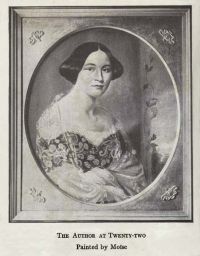
Portrait of Eliza Ripley Eliza Ripley From flag to flag (1888)

Sometimes for days we saw the sun only when it rose in ethereal fields of glory, and when it descended amid billows of gorgeous golden and crimson clouds. All day long the rain fell in torrents, and the waters poured and rushed in the furrows through the fields. The negroes huddled under the broad eaves of the sugar-house and other farm-buildings; and Lamo walked restlessly about the dwelling, noting great patches of grass here and there through the fields, that had sprung up like magic since yesterday, choking the tender young cane.
Source: Gutenberg

Portrait of Eliza Ripley Eliza Ripley From flag to flag (1888)

Cuba is a paradise for those who are too lazy to do anything but exist, as one can live there without labor. The tall, straight palm-tree, of which the poorer houses are built, can be split from end to end with wedge and axe, the pith easily removed, and the crescent-shaped sides, weighted down with heavy rocks upon the ground, will dry as flat as planks. The trunk, split half in two, makes excellent troughs and gutters, the feathery branches thatch their dwellings, the berries furnish food for their hogs, and the core of the pinnacle is as delicious as cauliflower.
Source: Gutenberg

Portrait of Eliza Ripley Eliza Ripley From flag to flag (1888)

We soon settled down to a life that was almost as new to us as if we had dropped from the moon. The mixture of bad Spanish and African jargon of the negroes I never did understand—nor did Lamo—but in time they understood me. Henry and Zell, and by-and-by Martha, could interpret for black and white, while Ellie and I could talk to and understand the whites. We worked with an energy, born of a more vigorous clime, that amazed our apathetic neighbors.
Source: Gutenberg

Get perspective with Kwize: daily news enlightened by great literature