“ More than any other such an infant has need of a nurse—is that not true?” “Yes,” the doctor admitted, “that is true. But—” “In that case, between the life of the child, and the health of the nurse, you understand perfectly well that my choice is made.” Between her words the doctor heard the sobbing of George, whose head was buried in his arms. “Madame,” he said, “your love for that baby has just caused you to utter something ferocious! It is not for you to choose. It is not for you to choose. I forbid the nursing. The health of that woman does not belong to you.” ”
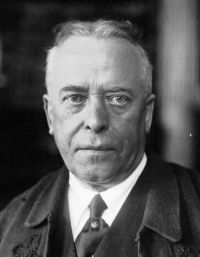
Eugène Brieux
Summary
“Damaged Goods”, is a work by Eugène Brieux. It explores elements such as Henriette, George and doctor.
Quotes from Damaged Goods (Eugène Brieux)
“ Have pity upon us! Have pity upon her! You speak of the weakest—it is not she who is the weakest? You have seen her, you have seen that poor little baby, so emaciated! You have seen what a heap of suffering she is already; and cannot that inspire in you any sympathy? I pray you, sir—I pray you!” “I pity her,” said the doctor, “I would like to save her—and I will do everything for her. But do not ask me to sacrifice to a feeble infant, with an uncertain and probably unhappy life, the health of a sound and robust woman. It is useless for us to continue such a discussion as that.” ”
“ George was putting the prescription into the outside pocket of his coat, stupidly, as if he did not know what he was doing. “But, sir,” he exclaimed, “I should have been spared!” “Why?” inquired the other. “Because you are a man of position, because you are rich? Look around you, sir. See these works of art in my room. Do you imagine that such things have been presented to me by chimney-sweeps?” “But, Doctor,” cried George, with a moan, “I have never been a libertine. There was never any one, you understand me, never any one could have been more careful in his pleasures. ”
