Summary

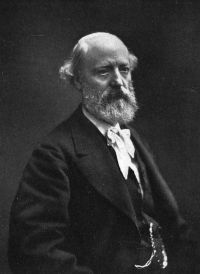
Portrait of Eugène Viollet-le-Duc Eugène Viollet-le-Duc Translation:Dictionary of French Architecture from the 11th to 16th Century

This last blind arcade can be given like one of the most complete models of this kind of decoration, and we do not know anything which can be compared to him. It is enriched by sculptures of the greatest beauty, and which have the merit to be laid out perfectly for the place that they occupy. The characters or animal round bump which fill the corner pieces between the arcs, formed like supports under the great figures leaned with columns, formerly upright on this base, and pointed out the martyrdom of the saints or personified them.
Source: Wikisource

Portrait of Eugène Viollet-le-Duc Eugène Viollet-le-Duc Translation:Dictionary of French Architecture from the 11th to 16th Century

It is not necessary to say, that the arches play a great part in the construction of the buildings of the Middle Ages, the architects had arrived, as of the XIII E century, to acquire a perfect knowledge of their force of resistance, and their effects on the piles and the walls, they put a particular care in the choice of the materials which were to compose them, in their apparatus, and the way of their joints. Roman architecture did nothing but open the way in the application of the archs to art to build
Source: Wikisource

Portrait of Eugène Viollet-le-Duc Eugène Viollet-le-Duc Translation:Dictionary of French Architecture from the 11th to 16th Century

In France the feeling of the proportions, relationships of the vacuums with the full ones, borer in architecture since it is released from cruelty. As of the XIth century these important details of the decoration of masonry, such as the blind arcades, are contained in right terminals, hold their place well, do not appear to be as in England or Italy, on the frontage of the cathedral of Pisa for example, of platings of a sterile invention.
Source: Wikisource

Get perspective with Kwize: daily news enlightened by great literature