Summary

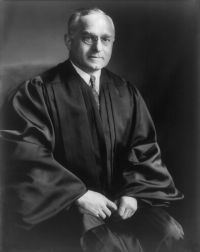
Portrait of Felix Frankfurter Felix Frankfurter National Labor Relations Board v…

In view of the economic and political strength which has thereby come to unions, interpretations of the Act ought not to proceed on the assumption that it actively throws its weight on the side of unionism in order to redress an assumed inequality of bargaining power. For the Court to fashion the rules governing collective bargaining on the assumption that the power and position of labor unions and their solidarity are what they were twenty-five years ago, is to fashion law on the basis of unreality. Accretion of power may carry with it increasing responsibility for the manner of its exercise.
Source: Wikisource

Portrait of Felix Frankfurter Felix Frankfurter National Labor Relations Board v…

But in determining the state of mind of a party to collective bargaining negotiations the Board does not deal in terms of abstract 'economic pressure.' It must proceed in terms of specific conduct which it weighs as a more or less reliable manifestation of the state of mind with which bargaining is conducted. No conduct in the complex context of bargaining for a labor agreement can profitably be reduced to such an abstraction as 'economic pressure.' An exertion of 'economic pressure' may at the same time be part of a concerted effort to evade or disrupt a normal course of negotiations.
Source: Wikisource

Portrait of Felix Frankfurter Felix Frankfurter National Labor Relations Board v…

At the core of the promotion of collective bargaining, which was the chief means by which the great social purposes of the National Labor Relations Act were sought to be furthered, is a purpose to discourage, more and more, industrial combatants from pressing their demands by all available means to the limits of the justification of self-interest.
Source: Wikisource

Get perspective with Kwize: daily news enlightened by great literature