Summary

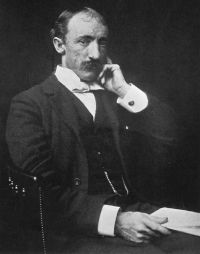
Portrait of Frank Hamilton Cushing Frank Hamilton Cushing A Study of Pueblo Pottery as Illustrative of Zuñi Culture Growth

In explaining how the form of this vessel is held to be symbolic I will quote a passage from the "creation myth" as I rendered it in an article on the origin of corn, belonging to a series on "Zuñi Breadstuff," published this year in the "Millstone" of Indianapolis, Indiana. "Is not the bowl the emblem of the earth, our mother? For from her we draw both food and drink, as a babe draws nourishment from the breast of its mother; and round, as is the rim of a bowl, so is the horizon, terraced with mountains whence rise the clouds."
Source: Gutenberg

Portrait of Frank Hamilton Cushing Frank Hamilton Cushing A Study of Pueblo Pottery as Illustrative of Zuñi Culture Growth

In the neighborhood of ruined pueblos which occur near mineral deposits furnishing a great variety of pigment-material, the decoration of the ceramic remains is so surprisingly and universally elaborate, beautiful, and varied as to lead the observer to regard the people who dwelt there as different from the people who had inhabited towns about the sites of which the sherds show not only meager skill and less profuse decorative variety, but almost typical dissimilarity.
Source: Gutenberg

Portrait of Frank Hamilton Cushing Frank Hamilton Cushing A Study of Pueblo Pottery as Illustrative of Zuñi Culture Growth

Pottery burned with sage or grease-wood was firm, light gray unless of ocherous clay, less cloudy than if ash-baked, yet mottled. Turf and dung, although easily managed, did not thoroughly harden the pottery, but burned it very evenly; dead wood or spunk-cakes baked as evenly as any of the materials thus far mentioned, and more thoroughly than the others. Resinous or pitchy woods, while they produced a much higher degree of heat, could be used only when color was unimportant, as they still are used to some extent in the firing of black-ware or cooking pots.
Source: Gutenberg

Get perspective with Kwize: daily news enlightened by great literature