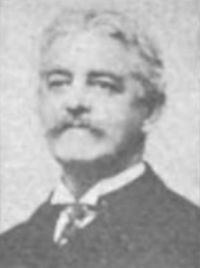
Frederick A. Ober

Frederick A. Ober

Summary

Portrait of Frederick A. Ober Frederick A. Ober Amerigo Vespucci

Nay, nay, good Signor Vespucci. I have the confidence in my heart that you are mistaken. I feel, indeed, persuaded, by the many and wonderful manifestations of divine Providence in my especial favor, that I am the chosen instrument of God in bringing to pass a great event: no less than the conversion of millions who are now existing in the darkness of paganism. I would, indeed, provide for the good of the poor natives we have already met, as well by building cities on their islands and cultivating their lands, as by the erection of churches and the establishment of Christian worship.
Source: Gutenberg

Portrait of Frederick A. Ober Frederick A. Ober Amerigo Vespucci

But for a long time all but a sagacious few continued to regard Cathay as a region distinct from any of the new-found Indies; while map-makers, well on into the seventeenth century, continued to represent it as a great country lying entirely to the north of China and stretching to the Arctic Sea. It was Cathay, with its outlying island of Zipangu, that Columbus sought to reach by sailing westward, penetrated as he was by his intense conviction of the smallness of the earth and of the vast extension of Asia to the eastward.
Source: Gutenberg

Portrait of Frederick A. Ober Frederick A. Ober Amerigo Vespucci

To whomsoever the credit may be given—whether to the man who conceived the idea, or to him who developed it, and whether or not Columbus intentionally appropriated the honor and glory exclusively—by the irony of fate, there stood a man at Toscanelli's elbow, as it were, when he wrote to the Genoese, who was destined to rob him of his great discovery's richest reward. This man was Amerigo Vespucci, after whom—though unsuggested by him and unknown to him—the continents of America were named, by strangers, before Christopher Columbus had lain a year in his grave!
Source: Gutenberg

Get perspective with Kwize: daily news enlightened by great literature