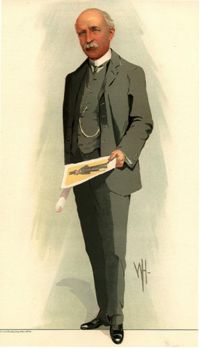
Frederick Vincent Brooks

Frederick Vincent Brooks

Summary

Portrait of Frederick Vincent Brooks Frederick Vincent Brooks 1911 Encyclopædia Britannica (1911)

On the first introduction of lithography the artists of every nation hastened to avail themselves of it, but soon the cumbrous character of the stone, and the fact that their subjects had to be drawn backwards in order that they might appear correctly on the paper, wore down their newly-born zeal, and it was only when the grained paper system was perfected, by which they could make their drawings in the comfort of their studios without reversing, that any serious revival took place.
Source: Wikisource

Portrait of Frederick Vincent Brooks Frederick Vincent Brooks 1911 Encyclopædia Britannica (1911)

The raison d’être of “stipple” work is its capacity for retransferring without serious loss of quality, for it can scarcely be contended that it is as artistic as the methods just described. Retransferring is the process of pulling impressions from the original stones with a view to making up a large sheet of one or more small subjects, or where it is desired to print a very large number without deterioration of the original or matrix stone.
Source: Wikisource

Portrait of Frederick Vincent Brooks Frederick Vincent Brooks 1911 Encyclopædia Britannica (1911)

The methods that sometimes prevail of pouring boiling water over the stone, heating with the flame of an ordinary plumber’s lamp, or even heating the surface in front of a fire, are ineffective substitutes, for the surface may thus become unduly hot and spread the work, and there is no increased tendency for the chalk to enter into the stone and thus give the work a long life. If there are no colours or registration troubles to be considered, it is well to place the transfer in a damping book till the composition adheres firmly to the finger, before placing it on the stone
Source: Wikisource

Get perspective with Kwize: daily news enlightened by great literature