Summary

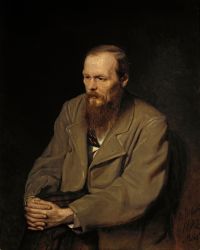
Portrait of Fyodor Dostoevsky Fyodor Dostoevsky The Brothers Karamazov — Part II, Book V, Chapter 5 (1880)

Behold what Thou didst further. And all again in the name of freedom! I tell Thee that man is tormented by no greater anxiety than to find someone quickly to whom he can hand over that gift of freedom with which the ill-fated creature is born. But only one who can appease their conscience can take over their freedom. In bread there was offered Thee an invincible banner; give bread, and man will worship thee, for nothing is more certain than bread. But if someone else gains possession of his conscience- Oh! then he will cast away Thy bread and follow after him who has ensnared his conscience.
Source: Wikisource

Portrait of Fyodor Dostoevsky Fyodor Dostoevsky The Brothers Karamazov — Part II, Book V, Chapter 5 (1880)

But then I will stand up and point out to Thee the thousand millions of happy children who have known no sin. And we who have taken their sins upon us for their happiness will stand up before Thee and say: "Judge us if Thou canst and darest." Know that I fear Thee not. Know that I too have been in the wilderness, I too have lived on roots and locusts, I too prized the freedom with which Thou hast blessed men, and I too was striving to stand among Thy elect, among the strong and powerful, thirsting "to make up the number."
Source: Wikisource

Portrait of Fyodor Dostoevsky Fyodor Dostoevsky The Brothers Karamazov — Part II, Book V, Chapter 5 (1880)

Nothing is more seductive for man than his freedom of conscience, but nothing is a greater cause of suffering. And behold, instead of giving a firm foundation for setting the conscience of man at rest for ever, Thou didst choose all that is exceptional, vague and enigmatic; Thou didst choose what was utterly beyond the strength of men, acting as though Thou didst not love them at all- Thou who didst come to give Thy life for them! Instead of taking possession of men's freedom, Thou didst increase it, and burdened the spiritual kingdom of mankind with its sufferings for ever.
Source: Wikisource

Get perspective with Kwize: daily news enlightened by great literature