Summary

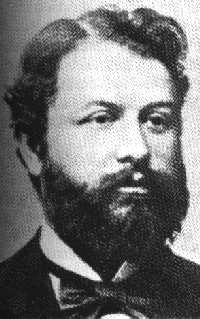
Portrait of Georg Jellinek Georg Jellinek The Declaration of the Rights of Man and of Citizens

Even Locke, for whom liberty forms the very essence of man, in his constitution for North Carolina sanctioned slavery and servitude.
Literature alone never produces anything, unless it finds in the historical and social conditions ground ready for its working. When one shows the literary origin of an idea, one has by no means therewith discovered the record of its practical significance. The history of political science to-day is entirely too much a history of the literature and too little a history of the institutions themselves.
Source: Gutenberg

Portrait of Georg Jellinek Georg Jellinek The Declaration of the Rights of Man and of Citizens

The American bills of rights do not attempt merely to set forth certain principles for the state's organization, but they seek above all to draw the boundary line between state and individual. According to them the individual is not the possessor of rights through the state, but by his own nature he has inalienable and indefeasible rights. The English laws know nothing of this. They do not wish to recognize an eternal, natural right, but one inherited from their fathers, "the old, undoubted rights of the English people."
Source: Gutenberg

Portrait of Georg Jellinek Georg Jellinek The Declaration of the Rights of Man and of Citizens

The idea of legally establishing inalienable, inherent and sacred rights of the individual is not of political but religious origin. What has been held to be a work of the Revolution was in reality a fruit of the Reformation and its struggles. Its first apostle was not Lafayette but Roger Williams, who, driven by powerful and deep religious enthusiasm, went into the wilderness in order to found a government of religious liberty, and his name is uttered by Americans even to-day with the deepest respect.
Source: Gutenberg

Get perspective with Kwize: daily news enlightened by great literature