Summary

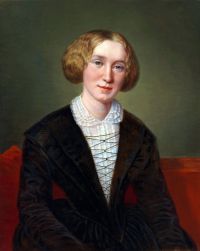
Portrait of George Eliot George Eliot The Mill on the Floss — Book 1… (1860)

Surely the time was gone forever when the broad river could bring up unwelcome ships; Russia was only the place where the linseed came from,–the more the better,–making grist for the great vertical millstones with their scythe-like arms, roaring and grinding and carefully sweeping as if an informing soul were in them. The Catholics, bad harvests, and the mysterious fluctuations of trade were the three evils mankind had to fear; even the floods had not been great of late years. The mind of St. Ogg's did not look extensively before or after.
Source: Wikisource

Portrait of George Eliot George Eliot The Mill on the Floss — Book 1… (1860)

I'd sooner you'd tell me to my face as you make light of me, than try to make out as everybody's in the right but me, and come to your breakfast in the morning, as I've hardly slept an hour this night, and sulk at me as if I was the dirt under your feet."
"Sulk at you?" said Mr. Glegg, in a tone of angry facetiousness. "You're like a tipsy man as thinks everybody's had too much but himself."
Source: Wikisource

Portrait of George Eliot George Eliot The Mill on the Floss — Book 1… (1860)

Yet it was witnessed in the floods of aftertime, that at the coming on of eventide, Ogg the son of Beorl was always seen with his boat upon the wide-spreading waters, and the Blessed Virgin sat in the prow, shedding a light around as of the moon in its brightness, so that the rowers in the gathering darkness took heart and pulled anew."
This legend, one sees, reflects from a far-off time the visitation of the floods, which, even when they left human life untouched, were widely fatal to the helpless cattle, and swept as sudden death over all smaller living things.
Source: Wikisource

Get perspective with Kwize: daily news enlightened by great literature