Summary

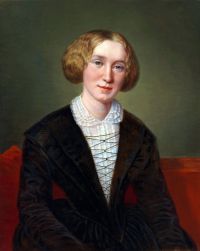
Portrait of George Eliot George Eliot The Mill on the Floss — Book 4… (1860)

It is a sordid life, you say, this of the Tullivers and Dodsons, irradiated by no sublime principles, no romantic visions, no active, self-renouncing faith; moved by none of those wild, uncontrollable passions which create the dark shadows of misery and crime; without that primitive, rough simplicity of wants, that hard, submissive, ill-paid toil, that childlike spelling-out of what nature has written, which gives its poetry to peasant life. Here one has conventional worldly notions and habits without instruction and without polish, surely the most prosaic form of human life
Source: Wikisource

Portrait of George Eliot George Eliot The Mill on the Floss — Book 4… (1860)

Journeying down the Rhone on a summer's day, you have perhaps felt the sunshine made dreary by those ruined villages which stud the banks in certain parts of its course, telling how the swift river once rose, like an angry, destroying god, sweeping down the feeble generations whose breath is in their nostrils, and making their dwellings a desolation.
Source: Wikisource

Portrait of George Eliot George Eliot The Mill on the Floss — Book 4… (1860)

I share with you this sense of oppressive narrowness; but it is necessary that we should feel it, if we care to understand how it acted on the lives of Tom and Maggie,–how it has acted on young natures in many generations, that in the onward tendency of human things have risen above the mental level of the generation before them, to which they have been nevertheless tied by the strongest fibres of their hearts. The suffering, whether of martyr or victim, which belongs to every historical advance of mankind, is represented in this way in every town, and by hundreds of obscure hearths
Source: Wikisource

Get perspective with Kwize: daily news enlightened by great literature