Summary

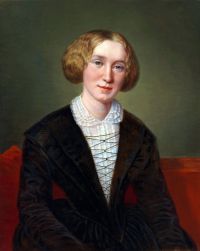
Portrait of George Eliot George Eliot The Mill on the Floss — Book 1… (1860)

Timpson had a large family of daughters; Mr. Riley felt for him; besides, Louisa Timpson's face, with its light curls, had been a familiar object to him over the pew wainscot on a Sunday for nearly fifteen years; it was natural her husband should be a commendable tutor. Moreover, Mr. Riley knew of no other schoolmaster whom he had any ground for recommending in preference; why, then, should be not recommend Stelling? His friend Tulliver had asked him for an opinion; it is always chilling, in friendly intercourse, to say you have no opinion to give.
Source: Wikisource

Portrait of George Eliot George Eliot The Mill on the Floss — Book 1… (1860)

Riley, "there's no greater advantage you can give him than a good education. Not," he added, with polite significance,–"not that a man can't be an excellent miller and farmer, and a shrewd, sensible fellow into the bargain, without much help from the schoolmaster."
"I believe you," said Mr. Tulliver, winking, and turning his head on one side; "but that's where it is. I don't mean Tom to be a miller and farmer.
Source: Wikisource

Portrait of George Eliot George Eliot The Mill on the Floss — Book 1… (1860)

I know, on good authority, that one of the chief people at Oxford said, Stelling might get the highest honors if he chose. But he didn't care about university honors; he's a quiet man–not noisy."
"Ah, a deal better–a deal better," said Mr. Tulliver; "but a hundred and fifty's an uncommon price. I never thought o' paying so much as that."
"A good education, let me tell you, Tulliver,–a good education is cheap at the money. But Stelling is moderate in his terms; he's not a grasping man. I've no doubt he'd take your boy at a hundred, and that's what you wouldn't get many other clergymen to do.
Source: Wikisource

Get perspective with Kwize: daily news enlightened by great literature