“ But she could not bear to see him cry."Oh, Evelyn, this cannot be."Then, feeling that the reality was too brutal, she yielded to the temptation to disguise the truth."I don't know what I shall do, Owen; there would be no use making promises.""Then you do love me a little, Evelyn?""Yes, Owen, you must never doubt that. I shall always be fond of you; remember that, whatever happens.""Yes, I know, as a friend. Look round! the earth and the sky are quiet, and one day we shall be quiet too, only that is sure." ”
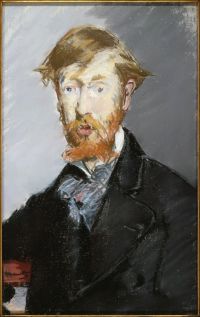
George Moore
Summary
George Moore’s Evelyn Innes (1894) examines the complex convergence of love, spirituality, and artistic aspiration through its protagonist, a talented singer caught between her dedication to a convent and her intense relationship with the worldly Owen. Set against the vibrant backdrop of London’s social elite and the strict environment of religious life, the novel explores Evelyn’s inner turmoil as she balances her identity as a “great singer” destined for the opera, her romantic involvements with Owen and the mysterious Ulick, and the ethical burden of her calling.
Themes of music, prayer, and the struggle between earthly passion and spiritual obligation run throughout the narrative, culminating in a moving reflection on destiny and sacrifice. Moore’s depiction of Evelyn’s conflict highlights the unavoidable tension between personal yearning and the unyielding framework of faith.
Quotes from Evelyn Innes (George Moore)
“ Owen did not seem to understand. His eye wandered, then returning to Harding, he said—"We cannot worship and be worshipped; is that what you mean? If so, I agree with you. But I'd sooner lose her as I have done than not have told her that I loved her.... There never was anyone like her. Sympathy, understanding, appreciation and enthusiasm! it was like living in a dream. Good God! to think that that priest should have got her; that, after all my teaching, she should think it wrong to have a lover! ”
“ Evelyn thought of the picture of the colonnade in the gallery.The men to whom the stately servants opened the doors wore long frock coats pinched at the waist, and they swung their canes and carried their thick, yellow gloves in their hands. They were all like Owen. They all lived as he lived, for pleasure; they were all here for the season, for balls and dinner parties, for love-making and the opera."They are the people," Evelyn thought, "who will pay thousands to hear me sing. They are the people who will invite me to their houses. If my voice is cultivated, if I ever go abroad." ”
