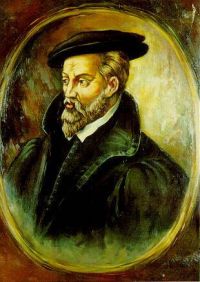
 Georgius Agricola,
De re metallica (1912) — Introduction
(1912)
Georgius Agricola,
De re metallica (1912) — Introduction
(1912)
“ To many even liberal scholars of the day, Luther's doctrines appeared wild and demagogic. Luther was not a scholarly man; his addresses were to the masses; his Latin was execrable. Nor did the bitter dissensions over hair-splitting theology in the Lutheran Church after Luther's death tend to increase respect for the movement among the learned. Agricola was a scholar of wide attainments, a deep-thinking, religious man, and he remained to the end a staunch Catholic, despite the general change of sentiment among his countrymen. ”
