Chemnitz

Definition and stakes

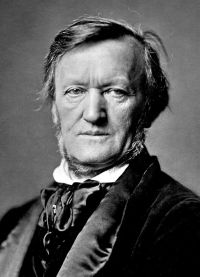
Portrait of Richard Wagner Richard Wagner,  My Life — Volume 1

“ I went on in advance with my little dog Peps, in order to hire a carriage in which to proceed on our journey to Chemnitz. It was a smiling spring morning when I traversed for the last time the paths I had so often trod on my lonely walks, with the knowledge that I should never wander along them again. While the larks were soaring to dizzy heights above my head, and singing in the furrows of the fields, the light and heavy artillery did not cease to thunder down the streets of Dresden. ”
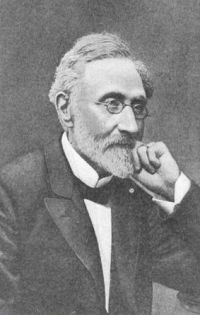
Source: Gutenberg

1911 Encyclopædia Britannica, Volume 6… (1911)

“ The centre is occupied by the market square, with the handsome medieval Rathaus, now superseded for municipal business by a modern building in the Post-strasse. In this square are monuments to the emperor William I., Bismarck and Moltke. The old inner town is surrounded by pleasant promenades, occupying the site of the old fortifications, and it is beyond these that industrial Chemnitz lies, girdling the old town on all sides with a thick belt of streets and factories, and ramifying far into the country. ”
Source: Wikisource

F. Bente,  Historical Introductions to the Symbolical Books of the Evangelical Lutheran Church

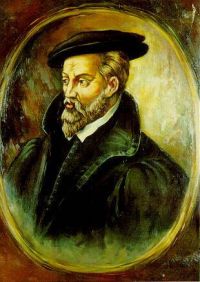
“ Owing to his participation in the Osiandrian controversy, Chemnitz lost the favor of Albrecht, and in 1553 he removed to Wittenberg. On June 9, 1554, he began his lectures on Melanchthon's Loci Communes before a large and enthusiastic audience, Melanchthon himself being one of his hearers. In November, 1554, he accepted a position as pastor, and in 1567 as superintendent, in the city of Brunswick. He died April 8, 1586. Chemnitz was the prince of the Lutheran divines of his age and, next to Luther, the greatest theologian of our Church. ”
Source: Gutenberg

Get perspective with Kwize: daily news enlightened by great literature