Summary

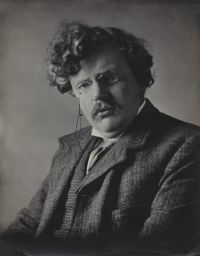
Portrait of Gilbert Keith Chesterton Gilbert Keith Chesterton Heretics — Chapter 19: Slum Novelists and the Slums (1905)

We have laws against blasphemy--that is, against a kind of coarse and offensive speaking in which nobody but a rough and obscure man would be likely to indulge. But we have no laws against heresy-- that is, against the intellectual poisoning of the whole people, in which only a prosperous and prominent man would be likely to be successful. The evil of aristocracy is not that it necessarily leads to the infliction of bad things or the suffering of sad ones; the evil of aristocracy is that it places everything in the hands of a class of people who can always inflict what they can never suffer.
Source: Wikisource

Portrait of Gilbert Keith Chesterton Gilbert Keith Chesterton Heretics — Chapter 19: Slum Novelists and the Slums (1905)

All things considered indeed, it may be said, without undue exaggeration, that the really undemocratic and unfraternal thing is the common practice of not kicking the butler downstairs.
It is only because such a vast section of the modern world is out of sympathy with the serious democratic sentiment that this statement will seem to many to be lacking in seriousness. Democracy is not philanthropy; it is not even altruism or social reform. Democracy is not founded on pity for the common man; democracy is founded on reverence for the common man, or, if you will, even on fear of him.
Source: Wikisource

Portrait of Gilbert Keith Chesterton Gilbert Keith Chesterton Heretics — Chapter 19: Slum Novelists and the Slums (1905)

It does not champion man because man is so miserable, but because man is so sublime. It does not object so much to the ordinary man being a slave as to his not being a king, for its dream is always the dream of the first Roman republic, a nation of kings.
Next to a genuine republic, the most democratic thing in the world is a hereditary despotism.
Source: Wikisource

Get perspective with Kwize: daily news enlightened by great literature