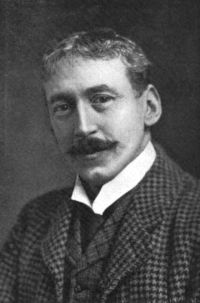
H. De Vere Stacpoole

H. De Vere Stacpoole

Summary

Portrait of H. De Vere Stacpoole H. De Vere Stacpoole Passion fruit (1924)

For, to a man of his type, love is a game against love where any sort of bluff is permissible and woman is a counter to be played for, cashed and forgotten.
But in Marianne he had come on a woman who refused to be a counter though her passion for him was as real as the passion of Cerise. He might as well have tried to play with the statue of Joan of Arc which stands in front of Noumea’s Cathedral.
Marianne was hopeless, so he thought, till the afternoon of the day before the Hawk’s departure, when coming along the Rue Austerlitz he met an old woman who put a little note in his hand.
Source: Gutenberg

Portrait of H. De Vere Stacpoole H. De Vere Stacpoole Passion fruit (1924)

It came with the rapidity which marks the processes of life and death in the warm lands, those terrible pays chauds where a woman is old at twenty-five, a passion full blown in an hour, a corpse corrupt in a day.
Every day Carstairs made his call at the shop. Being in love, he smoked many cigarettes; he called at the same hour and Marianne was there to receive him.
Source: Gutenberg

Portrait of H. De Vere Stacpoole H. De Vere Stacpoole Passion fruit (1924)

Monsieur Roche, who was a philosopher, or at least a restaurant keeper who had always kept his eyes open, gave it as his opinion that it were better for a man to be born ugly than very good-looking, and a boor than a fascinator; better for himself and for others. However that may be, Carstairs, on account of his superficial qualities, made many friends among the town people, and the cargo of the Hawk, being French government stores and discharged by convict labor, he had plenty of time on his hands.
Source: Gutenberg

Get perspective with Kwize: daily news enlightened by great literature