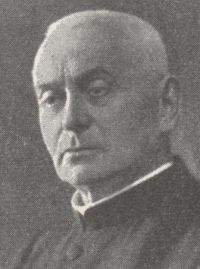
Hartmann Grisar

Hartmann Grisar

Summary

Portrait of Hartmann Grisar Hartmann Grisar Luther, vol. 2 of 6

This, Luther, is the result of your fine writings. Whoever says that you took them from the Word of Christ and that the clear light of the gospel shines through them, must indeed have been struck with blindness. None is more fickle than Luther; nowhere does he remain true to himself; first he commits his cause to the appointed judge, then he refuses to abide by the decision or to acknowledge any jurisdiction on earth. At one time he recognises all the seven Sacraments, at another only three, and no doubt he will soon admit none at all.
Source: Gutenberg

Portrait of Hartmann Grisar Hartmann Grisar Luther, vol. 2 of 6

If the peasant, by virtue of the common priesthood of all Christians, was capable of reforming the Church, why should he not have his say in the question of hunting-rights and the right of pasture? The kernel of the Wittenberg preaching was that all man-made ordinances were worthless, and that one thing only was to be considered, viz. the Word of God. The Pope was Antichrist, the Emperor a scarecrow, the Princes and Bishops simple dummies. How could such words of Luther fail to be seized on with avidity by the oppressed, down-trodden, and shamelessly victimised peasantry?
Source: Gutenberg

Portrait of Hartmann Grisar Hartmann Grisar Luther, vol. 2 of 6

Though I should live and work for all eternity, my conscience would never attain to a real peace and be able to say to itself, you have done enough for God.” He goes so far as to say: “For myself I admit, that, were free-will offered me, I should not care to have it; I should not wish to see anything placed within my power by means of which I might work for my salvation, because I should never be able to withstand and endure the trials and dangers of life and the assaults of so many devils.”
Source: Gutenberg

Get perspective with Kwize: daily news enlightened by great literature