Summary

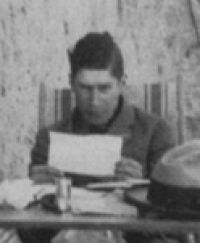
Portrait of Henri Frankfort Henri Frankfort The Birth of Civilization in the Near East

We are not, of course, looking for a formula; the character of a civilization is far too elusive to be reduced to a catchword. We recognize it in a certain coherence among its various manifestations, a certain consistency in its orientation, a certain cultural “style” which shapes its political and its judicial institutions, its art as well as its literature, its religion as well as its morals. I propose to call this elusive identity of a civilization its “form.” It is this “form” which is never destroyed although it changes in the course of time.
Source: Gutenberg

Portrait of Henri Frankfort Henri Frankfort The Birth of Civilization in the Near East

It is one thing to stress the singularity of each great epoch of the past as a prerequisite of deeper understanding, and quite another to declare the discontinuity of cultural achievements to be absolute. Had the first been Spengler’s intention, no one who had once comprehended the uniqueness of a historical situation, a work of art, or an institution, would have quarrelled with his dictum: “Each civilization has its own possibilities of expression, which appear, mature and wither, and never recur.”
Source: Gutenberg

Portrait of Henri Frankfort Henri Frankfort The Birth of Civilization in the Near East

Society moved in unison with nature. Justice, which was the social aspect of the cosmic order, pervaded the commonwealth. The “trust” which the people put in their “shepherds” was by no means what Toynbee imagines; their trust was that Pharaoh should wield to the full the absolute power to which his divinity entitled him, and which enabled him—as nothing else could—to ensure the well-being of the whole community.
Source: Gutenberg

Get perspective with Kwize: daily news enlightened by great literature