Summary

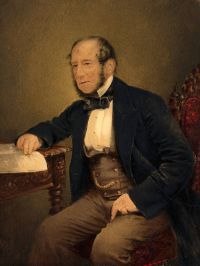
Portrait of Henry Adams Henry Adams The Education of Henry Adams — Chapter 25… (1918)

Gaudens at Amiens was hardly less sensitive to the force of the female energy than Matthew Arnold at the Grande Chartreuse. Neither of them felt Goddesses as power,—only as reflected emotion, human expression, beauty, purity, taste, scarcely even as sympathy. They felt a railway train as power, yet they, and all other artists, constantly complained that the power embodied in a railway train could never be embodied in art. All the steam in the world could not, like the Virgin, build Chartres.
Source: Wikisource

Portrait of Henry Adams Henry Adams The Education of Henry Adams — Chapter 25… (1918)

The knife-edge along which he must crawl, like Sir Lancelot in the twelfth century, divided two kingdoms of force which had nothing in common but attraction. They were as different as a magnet is from gravitation, supposing one knew what a magnet was, or gravitation, or love. The force of the Virgin was still felt at Lourdes, and seemed to be as potent as X-rays; but in America neither Venus nor Virgin ever had value as force;—at most as sentiment. No American had ever been truly afraid of either.
This problem in dynamics gravely perplexed an American historian.
Source: Wikisource

Portrait of Henry Adams Henry Adams The Education of Henry Adams — Chapter 25… (1918)

Before this historical chasm, a mind like that of Adams felt itself helpless; he turned from the Virgin to the Dynamo as though he were a Branly coherer. On one side, at the Louvre and at Chartres, as he knew by the record of work actually done and still before his eyes, was the highest energy ever known to man, the creator four-fifths of his noblest art, exercising vastly more attraction over the human mind than all the steam-engines and dynamos ever dreamed of; and yet this energy was unknown to the American mind. An American Virgin would never dare command
Source: Wikisource

Get perspective with Kwize: daily news enlightened by great literature