Summary

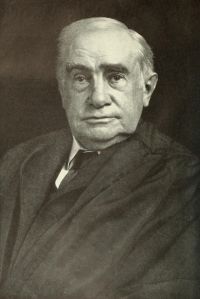
Portrait of Henry Billings Brown Henry Billings Brown Campbell v. Haverhill — Opinion of the Court

Why, too, should the fact that congress has created the right, limit the defenses to which the defendant would otherwise be entitled? Is it not more reasonable to presume that congress, in authorizing an action for infringement, intended to subject such action to the general laws of the state applicable to actions of a similar nature? In creating a new right, and providing a court for the enforcement of such right, must we not presume that congress intended that the remedy should be enforced in the manner risdiction?
Source: Wikisource

Portrait of Henry Billings Brown Henry Billings Brown Campbell v. Haverhill — Opinion of the Court

Defendant pleaded the statute of limitations of the state of Maryland. 'It is contended,' said Mr. Justice Story, 'that the present suit, being a statute remedy, is not within the purview of the statute of limitations. But we know of no difference in this particular between a common law and statute right. Each must be pursued according to the general rule of law, unless a different rule be prescribed by statute, and, where the remedy is limited to a particular form of action, all the general incidents of that action must attach upon it.
Source: Wikisource

Portrait of Henry Billings Brown Henry Billings Brown Campbell v. Haverhill — Opinion of the Court

Indeed, it is only within the present century that congress has vested exclusive jurisdiction of patent causes in the circuit courts, since by the act of February 21, 1793, § 5 (1 Stat. 322) , it was provided that damages in patent suits might be recovered by 'action on the case founded on this act, in the circuit court of the United States, or any other court having competent jurisdiction.' This remained the law until April 17, 1800, when congress for the first time vested exclusive jurisdiction in the circuit courts, but of actions at law only (2 Stat. 37)
Source: Wikisource

Get perspective with Kwize: daily news enlightened by great literature