Summary

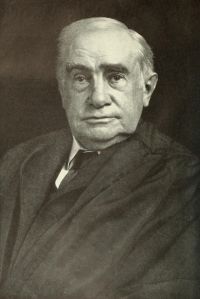
Portrait of Henry Billings Brown Henry Billings Brown Dashiell v. Grosvenor — Opinion of the Court

The very fact that a machine is patented is some evidence of its operativeness, as well as of its utility, and where a model is constructed after the design shown in a patent, which is not perfectly operative, but can be made so by a slight alteration, the inference is that there was an error in working out the drawings, and not that the patentee deliberately took out a patent for an inoperative device.
Source: Wikisource

Portrait of Henry Billings Brown Henry Billings Brown Dashiell v. Grosvenor — Opinion of the Court

In modern warfare, breech-loading guns have largely supplanted the old muzzle-loading patterns, and the skill of the inventor has been applied to perfecting the mechanism whereby the breech may be effectually closed, to prevent the escape of gas, and at the same time rapidly and easily opened and thrown back for the reception of another cartridge. Various forms of breech-block are used, but the patent in suit relates to what is known as the mutilated or slotted screw form, which consists of a circular plug of metal, with equal parts of its threads cut away.
Source: Wikisource

Portrait of Henry Billings Brown Henry Billings Brown Dashiell v. Grosvenor — Opinion of the Court

It does not seem probable that the patentee would have taken out a patent for a wholly inoperative combination, especially in view of the fact that there were at least half a dozen operative devices already in existence upon which his was claimed to be an improvement. Inoperative devices are frequently set up as anticipations, but they are usually such as have proven to be so far failures that the inventor has not taken out patents for them, and are resuscitated for the purpose of showing that other machines similar to the one patented have been invented before.
Source: Wikisource

Get perspective with Kwize: daily news enlightened by great literature