Summary

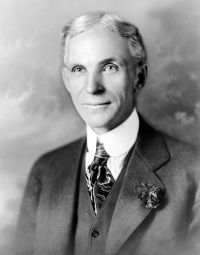
Portrait of Henry Ford Henry Ford My Life and Work — 2. What I Learned About Business (1922)

The man who has the largest capacity for work and thought is the man who is bound to succeed. I cannot pretend to say, because I do not know, whether the man who works always, who never leaves his business, who is absolutely intent upon getting ahead, and who therefore does get ahead--is happier than the man who keeps office hours, both for his brain and his hands. It is not necessary for any one to decide the question. A ten-horsepower engine will not pull as much as a twenty. The man who keeps brain office hours limits his horsepower.
Source: Wikisource

Portrait of Henry Ford Henry Ford My Life and Work — 2. What I Learned About Business (1922)

I saw great businesses become but the ghost of a name because someone thought they could be managed just as they were always managed, and though the management may have been most excellent in its day, its excellence consisted in its alertness to its day, and not in slavish following of its yesterdays. Life, as I see it, is not a location, but a journey. Even the man who most feels himself "settled" is not settled--he is probably sagging back.
Source: Wikisource

Portrait of Henry Ford Henry Ford My Life and Work — 2. What I Learned About Business (1922)

And also I noticed a tendency among many men in business to feel that their lot was hard--they worked against a day when they might retire and live on an income--get out of the strife. Life to them was a battle to be ended as soon as possible. That was another point I could not understand, for as I reasoned, life is not a battle except with our own tendency to sag with the downpull of "getting settled." If to petrify is success all one has to do is to humour the lazy side of the mind but if to grow is success, then one must wake up anew every morning and keep awake all day.
Source: Wikisource

Get perspective with Kwize: daily news enlightened by great literature