Summary

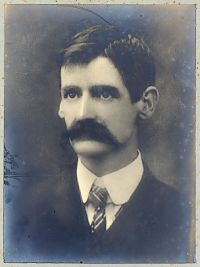
Portrait of Henry Lawson Henry Lawson Triangles of Life, and other stories (c.1916)

III. THE LITTLE MAN WITH THE SMILE
BILLY was a child of, and not with a gloomy family, with dimples as a boy, very grey eyes, and a roguish smile, which changed as he grew to a good-humoured one, and finally to the fixed smile of acquiescence. A tolerant smile he wore, even when his fiendish little elder sister tore at him and struck him. There was nothing but gloom at home, gloom and quarrels, shot occasionally with lurid rows.
Source: Wikisource

Portrait of Henry Lawson Henry Lawson Triangles of Life, and other stories (c.1916)

It may be heroic for a drunkard to do a brave deed, and save lives, as drunkards often do. It is certainly picturesque, but there is such a thing as Dutch age. It may be noble, and it is romantic and picturesque, for a scamp to do a deed of self-sacrifice, but there is generally little to lose, even with life, and there is vanity—and there is a character to be regained. It may be generous, even noble, for a drunkard to stick to another through thick and thin, but there is the bond, or the sympathy, of the craving for drink—and there is such a thing as maudlin sentiment.
Source: Wikisource

Portrait of Henry Lawson Henry Lawson Triangles of Life, and other stories (c.1916)

We Australians seem to adapt ourselves so quickly to strange places and upside-down conditions. Already London walls seem less dark and dirty to me—London streets less narrow, crowded and sordid, the whole city less like a big squalid village. The houses are growing every day, and I suppose as I go on the lives of the bulk of London humanity, and of two classes of London society especially—that of fashionable West End and that of Spitalfields, for instance—will seem less and less hopelessly useless and unnecessary to the existence of the world.
Source: Wikisource

Get perspective with Kwize: daily news enlightened by great literature