Summary

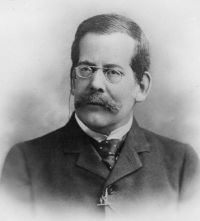
Portrait of Henry Sweet Henry Sweet Anglo-Saxon Primer, With Grammar…

In the Grammar I have cut down the phonology to the narrowest limits, giving only what is necessary to enable the beginner to trace the connection of forms within the language itself. Derivation and syntax have been treated with the same fulness as the inflections. In my opinion, to give inflections without explaining their use is as absurd as it would be to teach the names of the different parts of a machine without explaining their use, and derivation is as much a fundamental element of a language as inflection.
Source: Gutenberg

Portrait of Henry Sweet Henry Sweet Anglo-Saxon Primer, With Grammar…

The gender is partly natural, partly {8}grammatical. By the natural gender names of male beings, such as se mann (the man) , are masculine; of female beings, such as sēo dohtor (the daughter) , are feminine; and of young creatures, such as þæt ċild (the child) , neuter. Note, however, that þæt wīf (woman) is neuter.
Grammatical gender is known only by the gender of the article and other words connected with the noun, and, to some extent, by its form. Thus all nouns ending in -a, such as se mōna (moon) , are masculine, sēo sunne (sun) being feminine.
Source: Gutenberg

Portrait of Henry Sweet Henry Sweet Anglo-Saxon Primer, With Grammar…

Some govern both accusative and dative, such as ofer (over) , on (on, in) , under (under) . The general rule is that when motion is implied they take the accusative, when rest is implied, the dative. Thus on with the accusative signifies 'into,' with the dative 'in.' But this rule is not strictly followed, and we often find the accusative used with verbs of rest, as in hē his hūs ġe·timbrode ofer stān (he built his house on a rock) , and conversely, the dative with verbs of motion, as in hīe fēollon on stǣnihte (they fell on stony ground) .
Source: Gutenberg

Get perspective with Kwize: daily news enlightened by great literature