Summary

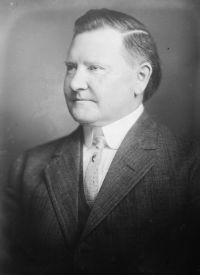
Portrait of Herbert John Webber Herbert John Webber The Effect of Research in Genetics on the Art of Breeding (1912)

True, we touch the limits of knowledge on every hand and many of the most fundamental problems still remain unsolved, yet our understanding to-day, which enables us to analyze a plant into its component parts or characters, and then in turn by synthesis to build up a new structure by the combination of different characters into a new race or variety, is to our former understanding as light to darkness. The knowledge of breeding has developed into the science of genetics, and is fast assuming through the orderly presentation and classification of facts, the form of an exact science.
Source: Wikisource

Portrait of Herbert John Webber Herbert John Webber The Effect of Research in Genetics on the Art of Breeding (1912)

Since Darwin’s time this cumulative action of selection has been emphasized so forcibly that we had come to recognize selection as an active force in creation rather than simply as a selective agency. To be the vital principle of evolution, as we now understand the species as made up of heritable unit characters, the selectionist must show that a new character can be created by selection, otherwise selection becomes a secondary principle.
Source: Wikisource

Portrait of Herbert John Webber Herbert John Webber The Effect of Research in Genetics on the Art of Breeding (1912)

If the breeder must await the pleasure of nature to secure the changes he desires, the waiting may be long and tedious. If he must watch thousands of plants of a certain race or species every year in order to find the apparently accidental variation or mutation in the direction of the improvement he has in mind which may rarely or never be found, the process will be so hazardous that we should have to await the accidental discovery of any new characters.
Source: Wikisource

Get perspective with Kwize: daily news enlightened by great literature