Summary

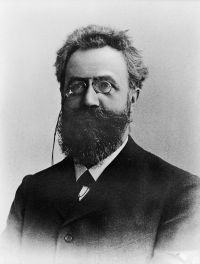
Portrait of Hermann Ebbinghaus Hermann Ebbinghaus Memory: A Contribution to Experimental Psychology… (1913)

Mental states of every kind,—sensations, feelings, ideas,—which were at one time present in consciousness and then have disappeared from it, have not with their disappearance absolutely ceased to exist. Although the inwardly-turned look may no longer be able to find them, nevertheless they have not been utterly destroyed and annulled, but in a certain manner they continue to exist, stored up, so to speak, in the memory.
Source: Wikisource

Portrait of Hermann Ebbinghaus Hermann Ebbinghaus Memory: A Contribution to Experimental Psychology… (1913)

Although the conceptions in question—namely, degrees of forgetfulness, of certainty and interest—are quite correct, we have no means for establishing such degrees in our experience except at the extremes, and even then we cannot accurately limit those extremes. We feel therefore that we are not at all in a condition to undertake the investigation. We form certain conceptions during striking experiences, but we cannot find any realisation of them in the similar but less striking experiences of everyday life.
Source: Wikisource

Portrait of Hermann Ebbinghaus Hermann Ebbinghaus Memory: A Contribution to Experimental Psychology… (1913)

The amount of detailed information which an individual has at his command and his theoretical elaborations of the same are mutually dependent; they grow in and through each other. It is because of the indefinite and little specialised character of our knowledge that the theories concerning the processes of memory, reproduction, and association have been up to the present time of so little value for a proper comprehension of those processes. For example, to express our ideas concerning their physical basis we use different metaphors—stored up ideas, engraved images, well-beaten paths.
Source: Wikisource

Get perspective with Kwize: daily news enlightened by great literature