Summary

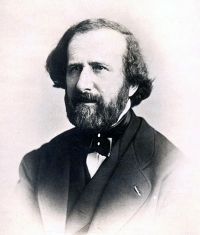
Portrait of Hippolyte Fizeau Hippolyte Fizeau Hypotheses on luminous ether and on an experiment that appears to demonstrate that the motion of… (1971)

The displacement of the fringes is not really zero, but it is so weak that it cannot be noticed.
After obtaining this negative fact, I still continued to search for an explanation for the hypotheses relative to ether that would, at the same time, explain the phenomenon of abberation and Arago's experiment. It seemed to me that it was necessary to admit with Fresnel that the motion of bodies produces a change in the speed of light, and that the magnitude of this change of speed depends upon the energy with which the different media refract light.
Source: Wikisource

Portrait of Hippolyte Fizeau Hippolyte Fizeau Hypotheses on luminous ether and on an experiment that appears to demonstrate that the motion of… (1971)

If the body is set in motion, only a part of the interior ether is set in motion with the body; this is the portion that has a greater density than that of the surrounding ether. The density of this mobile portion is expressed by D' - D. The other portion of the ether, which remains immobile while the motion takes place, has a density D.
What is the speed of propagation of the waves in this type of medium — a portion in motion and a portion motionless — supposing, for simplicity's sake, that the body moves in the direction of propagation of the waves?
Source: Wikisource

Portrait of Hippolyte Fizeau Hippolyte Fizeau Hypotheses on luminous ether and on an experiment that appears to demonstrate that the motion of… (1971)

First, Fresnel and, more recently, Doppler, Stokes, Challis and several others have published papers on this subject, but it does not seem that any of the theories so far proposed have been able to completely satisfy the physicists. Because of a lack of definite knowledge about the properties of the luminous ether and its relationship to ponderable matter, it has been necessary to introduce hypotheses, among which are those which are more or less probable, but none that can be considered as proven.
Source: Wikisource

Get perspective with Kwize: daily news enlightened by great literature