Summary

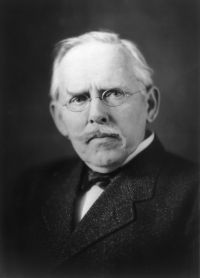
Portrait of Jacob A. Riis Jacob A. Riis The Children of the Poor

For many hours after that has passed, as after every public show that costs nothing, the matron’s room at Police Headquarters is crowded with youngsters who have followed it miles and miles from home, devouring its splendors with hungry eyes until the last elephant, the last soldier, or the last policeman vanished from sight and the child comes back to earth again and to the knowledge that he is lost.
If the delights of his life are few, its sorrows do not sit heavily upon him either. He is in too close and constant touch with misery, with death itself, to mind it much.
Source: Gutenberg

Portrait of Jacob A. Riis Jacob A. Riis The Children of the Poor

It was the death of little Giuseppe that brought me to his home, a dismal den in a rear tenement down a dark and forbidding alley. I have seldom seen a worse place. There was no trace there of a striving for better things—the tenement had stamped that out—nothing but darkness and filth and misery. From this hole Giuseppe had come to the school a mass of rags, but with that jovial gleam in his brown eyes that made him an instant favorite with the teachers as well as with the boys.
Source: Gutenberg

Portrait of Jacob A. Riis Jacob A. Riis The Children of the Poor

To find a family of children living, sleeping, and eating in the room where father or mother lies dead, without seeming to be in any special distress about it, is no unusual experience. But if they do not weigh upon him, the cares of home leave their mark; and it is a bad mark. All the darkness, all the drudgery is there. All the freedom is in the street; all the brightness in the saloon to which he early finds his way.
Source: Gutenberg

Get perspective with Kwize: daily news enlightened by great literature