Summary

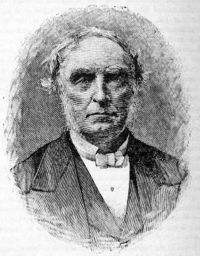
Portrait of James Legge James Legge 1911 Encyclopædia Britannica, Volume 6… (1911)

Many years before he was born, an ancient hero and king had proclaimed in China: “The great God has conferred on the people a moral sense, compliance with which would show their nature invariably right. To cause them tranquilly to pursue the course which it indicates is the task of the sovereign.” Confucius knew the utterance well; and he carried out the principle of it, and insisted on its application in all the relations of society. He taught emphatically that a bad man was not fit to rule.
Source: Wikisource

Portrait of James Legge James Legge 1911 Encyclopædia Britannica, Volume 6… (1911)

Tze-lu went back, and reported what the man had said to the master, who observed: “It is impossible to withdraw from the world, and associate with birds and beasts that have no affinity with us. With whom should I associate but with suffering men? The disorder that prevails is what requires my efforts. If right principles ruled through the kingdom, there would be no necessity for me to change its state.” We must recognize in those words a brave heart and a noble sympathy. Confucius would not abandon the cause of the people.
Source: Wikisource

Portrait of James Legge James Legge 1911 Encyclopædia Britannica, Volume 6… (1911)

He does not promote a man simply because of his words, nor does he put good words aside because of the man.”
“A poor man who does not flatter, and a rich man who is not proud, are passable characters; but they are not equal to the poor who yet are cheerful, and the rich who yet love the rules of propriety.”
“Learning, undigested by thought, is labour lost; thought unassisted by learning, is perilous.”
Source: Wikisource

Get perspective with Kwize: daily news enlightened by great literature