Summary

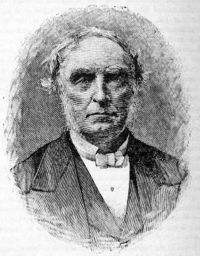
Portrait of James Legge James Legge 1911 Encyclopædia Britannica, Volume 18… (1911)

A good government according to his ideal must be animated by a spirit of benevolence, and ever pursue a policy of righteousness. Its aims must be, first, to make the people well off, and next, to educate them. No one was fit to occupy the throne who could be happy while any of the people were miserable, who delighted in war, who could indulge in palaces and parks which the poorest did not in a measure share with him.
Source: Wikisource

Portrait of James Legge James Legge 1911 Encyclopædia Britannica, Volume 18… (1911)

To dwell in love, the wide house of the world, to stand in propriety, the correct seat of the world, and to walk in righteousness, the great path of the world; when he obtains his desire for office, to practise his principles for the good of the people, and when that desire is disappointed, to practise them alone; to be above the power of riches and honours to make dissipated, of poverty and mean condition to make swerve from the right, and of power and force to make bend—these characteristics constitute the great man.
Source: Wikisource

Portrait of James Legge James Legge 1911 Encyclopædia Britannica, Volume 18… (1911)

The people would flock to him as their parent, and help him to do justice on the foes of truth and happiness. Pulse and grain would be abundant as water and fire, and the multitudes, well clothed, and well principled, would sit under the shade of their mulberry trees, and hail the ruler “king by the grace of Heaven.”
Opinions were much divided among his contemporaries on the subject of human nature. Some held that the nature of man is neither good nor bad; he may be made to do good and also to do evil. Others held that the nature of some men is good, and that of others bad
Source: Wikisource

Get perspective with Kwize: daily news enlightened by great literature