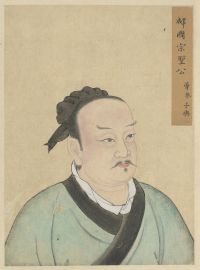
Zengzi

Zengzi

Summary

Portrait of Zengzi Zengzi,  The Great Learning (1872)

“ The virtuous ruler, by means of his wealth, makes himself more distinguished. The vicious ruler accumulates wealth, at the expense of his life. Never has there been a case of the sovereign loving benevolence, and the people not loving righteousness. Never has there been a case where the people have loved righteousness, and the affairs of the sovereign have not been carried to completion. ”
Source: Wikisource

Portrait of Zengzi Zengzi,  The Great Learning (1872)

“ When the sovereign behaves to his aged, as the aged should be behaved to, the people become filial; when the sovereign behaves to his elders, as the elders should be behaved to, the people learn brotherly submission; when the sovereign treats compassionately the young and helpless, the people do the same. Thus the ruler has a principle with which, as with a measuring square, he may regulate his conduct. What a man dislikes in his superiors, let him not display in the treatment of his inferiors; what he dislikes in inferiors, let him not display in the service of his superiors ”
Source: Wikisource

Portrait of Zengzi Zengzi,  The Great Learning (1872)

“ Virtue is the root; wealth is the result. If he makes the root his secondary object, and the result his primary, he will only wrangle with his people, and teach them rapine. Hence, the accumulation of wealth is the way to scatter the people; and the letting it be scattered among them is the way to collect the people. And hence, the ruler's words going forth contrary to right, will come back to him in the same way, and wealth, gotten by improper ways, will take its departure by the same. In the Announcement to Kang, it is said, "The decree indeed may not always rest on us" ”
Source: Wikisource

Get perspective with Kwize: daily news enlightened by great literature