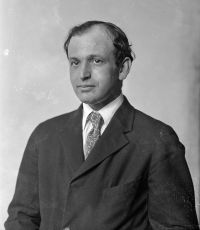
James Oppenheim

James Oppenheim

City Nights (1912)

Summary

Portrait of James Oppenheim James Oppenheim City Nights (1912)

He found her other hand, and suddenly Nature seized each of them in a starry fist and brought them together; what did Nature care whether her children willed to mate or not? They felt a terrific gravitation, a breaking of the waters, a fierce, exultant sweep toward each other.
"Oh, Frances!" he cried, and with that they clasped, and they kissed. And through that kiss, as through a magic door, they passed into an enchanted region where they were no more Frances and Edward, or man and woman, but a two-hearted god, swaying with glory.
Source: Wikisource

Portrait of James Oppenheim James Oppenheim City Nights (1912)

A common enough sight—a thin, starved life thirsting for joy and comradeship.
Glancing at her, it struck Edward that such was Frances's future if she did not marry—the starved, lonely city life of a manless girl. Possibly Frances felt some of this, too.
They went on down the sands. Night had come, the large summer night with throbbing stars, and out of darkness a liquid song of waves breaking their mystery at the feet of men and women. They walked along the sand. Out on the waters were sparkles of light, and in the distance the sharp, vanishing glance of a lighthouse.
Source: Wikisource

Portrait of James Oppenheim James Oppenheim City Nights (1912)

Melodious waves whitened on the shore, and blue and green and violet were on the heave of the immense waters. Quietness came and the beauty the dissolves the restlessness of human hearts. They walked side by side, close to the music of the waves, and all at once they were alone, and they were together.
Now was the time to speak; now if ever, Edward could free himself, now with Frances growing quiet beside him, and all annoyance and fretfulness falling away. He felt full of peace and pity; "Frances," he found himself whispering he knew now that she must forgive him
Source: Wikisource

Get perspective with Kwize: daily news enlightened by great literature