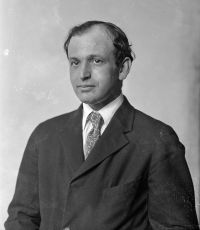
James Oppenheim

James Oppenheim

Mr. Fitch (1913)

Summary

Portrait of James Oppenheim James Oppenheim Mr. Fitch (1913)

Gusts of trouble came to Elsa. She held in her failing hands all the years of her life; it was that creation-moment when she could make her own future; when, by jetting up a little of her old strength, she could keep to the life-work, the great career, she could conserve the struggles, the ambitions, the agony and joy of the past. Was it not shameful, too? To Mr. Fitch she was merely a woman; but in her work she was a power, a force to be reckoned with. Surely a few days' hunger, a slight money debt could not weaken her so!
Source: Wikisource

Portrait of James Oppenheim James Oppenheim Mr. Fitch (1913)

Enid at least would put her arms about her and kiss her.
She turned back into the shadows, put her little coat over the sweater, pinned on her hat, and then fled from the house. The bracing air sent her swiftly through the streets: a woman making the great search, the universal search, the search for understanding and love.
Alighting from the car, she turned down a narrow side-street, the little red-brick houses of which stood one below the other on a downward slope. Elsa stopped before one of the little houses, the shade of whose front room was a warm yellow with the gas-light behind it.
Source: Wikisource

Portrait of James Oppenheim James Oppenheim Mr. Fitch (1913)

A forgotten woman-chord was touched in Elsa as the awkward, proud old woman took her through, It was as if she were being taken by the mother down back through the life of her son, so that she might live it over and so immerse herself in him. She had to think of the big man as a baby (this was the room he was born in) , as a child learning to walk, as a boy playing great games in the garret.
Source: Wikisource

Get perspective with Kwize: daily news enlightened by great literature