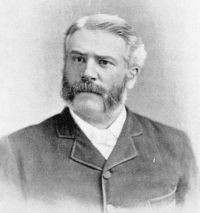
Jesse Lyman Hurlbut

Jesse Lyman Hurlbut

Summary

Portrait of Jesse Lyman Hurlbut Jesse Lyman Hurlbut The Story of Chautauqua

Think of one city which in the departments of literature, drama, philosophy, oratory, art, and public affairs could show more great men in two hundred years than all the rest of the world could show in two thousand!
We were treated during the season of 1913 to a sight new at that time, though common enough now. Mr. Engels brought to Chautauqua a Curtiss hydroplane, and day after day made flights, skimming over the surface of the lake, rising into the air, circling the sky and returning to the starting-point, to the amazement of the watching multitudes.
Source: Gutenberg

Portrait of Jesse Lyman Hurlbut Jesse Lyman Hurlbut The Story of Chautauqua

Why try to rival the high schools and arouse the criticism of the colleges? How would the regular constituency [123] of Chautauqua feel at this innovation? No doubt under the spell of his enthusiasm, some would join the proposed class in literature and science—but how could science be studied by untrained people without laboratories, or apparatus, or teachers? And after the spell of the Chautauqua season would not the pledges be forgotten at home, and the numbers in the home classes soon dwindle away to nothing?
Source: Gutenberg

Portrait of Jesse Lyman Hurlbut Jesse Lyman Hurlbut The Story of Chautauqua

Bishop Vincent's Tent-Cottage
What is now Miller Park, the level ground and lovely grove at the foot of the hill, was then the Auditorium, where stood a platform and desk sheltered from sun on some days and rain on others. Before it was an array of seats, lacking backs, instead of which the audience used their own backbones. Perhaps two thousand people could find sitting-room under the open sky, shaded by the noble trees. A sudden shower would shoot up a thousand umbrellas.
Source: Gutenberg

Get perspective with Kwize: daily news enlightened by great literature