Summary

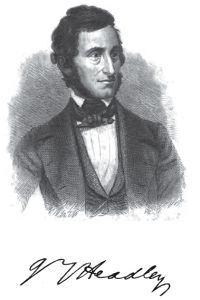
Portrait of Joel Tyler Headley Joel Tyler Headley The Great Riots of New York, 1712 to 1873

The folly of such a course was instantly shown, for the mob, roused into sudden fury, dashed on the small body of soldiers before they could reload, and snatching away their muskets, pounded them over the head, and chased them like sheep for ten blocks. One soldier was left for dead on the pavement, beaten to a jelly. Another, breaking from the crowd, attempted to climb some rocks near Forty-second Street, when his pursuers grabbed him and dragged him to the top, where they tore off his uniform, and beat him till he was senseless, and then threw him down to the bottom and left him.
Source: Gutenberg

Portrait of Joel Tyler Headley Joel Tyler Headley The Great Riots of New York, 1712 to 1873

This week of horrors—a week unparalleled in the history of New York—was drawing to a close. It had been one of terror and dismay to the inhabitants, who thought only of the immediate effects on themselves of the triumph of the mob. A great city laid in ashes, given, up to robbers and cut-throats, is at any time a terrible spectacle; but New York in ruins at this time was a republic gone—a nation, uncrowned and left desolate
Source: Gutenberg

Portrait of Joel Tyler Headley Joel Tyler Headley The Great Riots of New York, 1712 to 1873

Though opposed by a large majority of his congregation, he had become known as a bold, outspoken man against slavery; and now the mob, bent on mischief, streamed across the city toward his church. It was dark, and as they gathered in a black, dense mass in front of it, suddenly, as if by a common impulse, a loud yell broke forth, and the next moment a shower of stones and brick-bats fell on the windows. Babel was now let loose, and, amid the crashing of window-glass, arose every variety of sound and all kinds of calls, interspersed with oaths and curses on "Abolitionists and niggers."
Source: Gutenberg

Get perspective with Kwize: daily news enlightened by great literature