Summary

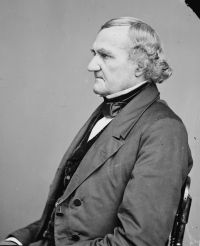
Portrait of John Catron John Catron Lea v. Polk County — Opinion of the Court

The bill of necessity admits that the legal title was vested in William Park Lea by the grant as it now stands; as, on any other assumption, the complainant would have his remedy at law, and must be turned out of court. The title has thus stood since 1842; important rights have grown up under it, with which a court of equity cannot interfere, on general principles of justice.
Source: Wikisource

Portrait of John Catron John Catron Lea v. Polk County — Opinion of the Court

This patent (No. 5,744) the bill seeks to have reformed so as to stand in the name of William P. Lea, the complainant, and to be used in an action of ejectment pending in the court below, by the complainant, against the respondents; and, secondly, if said grant shall be found to have been issued to the person not entitled to the land, that then the court will divest the title of the respondents, and vest it in the complainant, so that he may use the decree on the trial of his action of ejectment.
Source: Wikisource

Portrait of John Catron John Catron Lea v. Polk County — Opinion of the Court

Answer. He (John Davis) stated to me that the reason he moved them was, that he was afraid he would lose his labor, as he had understood a man by the name of Lea had entered the land, and stated that he did not own the land.
State whether or not you ever heard John Davis claim the land where the Luther Wallace improvement was, at any time while you lived with him.
Answer. The Luther Wallace place is now called Copper Hill. I think in about the year 1849, after the copper property came into notice, John Davis set up a claim, and said it.
Source: Wikisource

Get perspective with Kwize: daily news enlightened by great literature