Summary

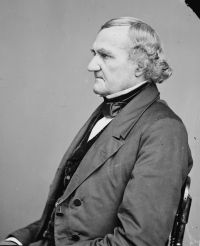
Portrait of John Catron John Catron Lord v. Goddard — Opinion of the Court

It is as if the plaintiff had said to defendant, 'We know all about the pecuniary circumstances and credit of West & Daby; they are well worthy of credit, and good for what they wish to purchase.'
The plaintiffs did not undertake to assert a mere opinion, but they stated a fact as of their own knowledge. That statement was grossly untrue.
It is as false and fraudulent to state positively as true, as a fact, what one knows nothing about, as what one knows to be false.
Source: Wikisource

Portrait of John Catron John Catron Lord v. Goddard — Opinion of the Court

Goddard could not have supposed that the language of the plaintiffs was adopted simply to express an opinion founded on such a miserable basis as they now allege. Are not men to be held responsible for such reckless and wanton disregard of the rights of others as is shown in this case, even when considered in the most favorable aspect for the plaintiffs?
Where the legitimate consequence of a positive assertion, false in fact, is to cause an injury to an innocent party, every principle of morality and every rule of law, forbids its being made with impunity.
Source: Wikisource

Portrait of John Catron John Catron Lord v. Goddard — Opinion of the Court

V. The charge to the jury does not require them to inquire whether the plaintiffs in error had any knowledge that the representation was false, or any fraudulent purpose. But it authorizes them to find a verdict for the plaintiff in that action, notwithstanding they had no such knowledge or suspicion, and acted in entire good faith.
It leaves to the jury, in effect, the question, whether, in their opinion, the plaintiffs in error acted without sufficient caution; with directions, in that case, to charge them. Nothing, it is believed, having the character of authority, sustains such a position.
Source: Wikisource

Get perspective with Kwize: daily news enlightened by great literature