Summary

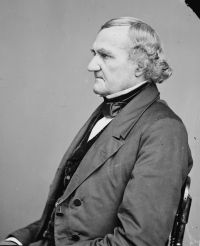
Portrait of John Catron John Catron McCoy v. Rhodes — Opinion of the Court

We think it fully established, then, that, even if the acquisition of the lands was made with the funds of Luminda Montgomery, and the deed taken in her own name, as it was, still she cannot lawfully oppose the foreclosure of complainant's mortgage.
But it is not true that the lands were acquired with her funds or effects. In any form of action against her husband, his heirs, or his creditors, it is indispensably necessary for her to establish, by proof, that the property was acquired with her funds or effects.
Source: Wikisource

Portrait of John Catron John Catron McCoy v. Rhodes — Opinion of the Court

Some supposed difficulty exists on the head of jurisdiction for want of parties, Eli Montgomery not being before the court. We do not deem him a necessary party to this suit; he has no interest in the land, and no right to contest the validity of the judgment against Rhodes. And, in the next place, we are of opinion that all necessary parties were before the Circuit Court according to the forty-seventh and forty-eighth rules of chancery practice published by us in 1842, as the bill alleges that Eli Montgomery permanently resided beyond the jurisdiction of the court
Source: Wikisource

Portrait of John Catron John Catron McCoy v. Rhodes — Opinion of the Court

If the defendant Luminda Montgomery has applied her proper effects in the purchase of the lands, (which is denied by complainant,) she has a tacit mortgage on all the immovable property of her husband, and on the immovables of the community (which includes these lands) , for the satisfaction thereof. This claim she must set up against the complainant (after suit instituted against her husband for separation of property) by original or cross bill, &c.
She has not set it up, nor could she be heard to set it up in an answer.
Source: Wikisource

Get perspective with Kwize: daily news enlightened by great literature