Summary

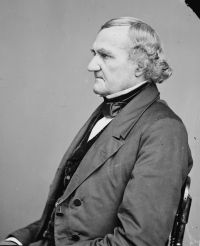
Portrait of John Catron John Catron United States v. Moore (53 U.S. 209…

The purpose of Congress was first, to authorize a suit against the United States; and, in the next place, to give judicial cognizance of a description of incipient claims having no standing in a court of justice before the act was passed; and, thirdly, that the petitioner should be bound to sue private persons, claiming the same land, so that those having an interest, and better knowledge of facts, and more capacity to defend, than the United States, might be drawn into the contest
Source: Wikisource

Portrait of John Catron John Catron United States v. Moore (53 U.S. 209…

He must thereafter apply to the proper officers of the United States, who are entrusted by law to make sales of the public lands and carry them into grant. It would not do for such depositor to stop at his deposit of money in the treasury, omitting all the subsequent means required by law, in order to obtain a title to the lands mentioned in the treasurer's receipt. If such a depositor should hold such a receipt for thirty or forty years, and then claim the land mentioned in the receipt, his claim would be pronouneed ridiculous and absurd.
Source: Wikisource

Portrait of John Catron John Catron United States v. Moore (53 U.S. 209…

It is simply a receipt for money paid into the treasury of Spain by Iriarte, for land which he desired to purchase; the description of the land is the sole act of Iriarte himself, not founded on any previous act of the officer of Spain for the Province of Louisiana, who was authorized to make grants, concessions, warrants, and orders of survey; nor is it sanctioned and ratified by any subsequent act of grant, concession, warrant, or order of survey, to define the boundaries and sever the land from the public domain.
Source: Wikisource

Get perspective with Kwize: daily news enlightened by great literature