Summary

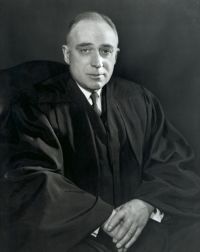
Portrait of John Marshall Harlan II John Marshall Harlan II Zuber v. Allen — Opinion of the Court

Absent regulation only the handlers, if anyone, would stand to benefit from the 'fluid' monopoly. While we cannot project what would be the case today if a free market prevailed, we might well anticipate that the nearby producers' winter advantages would be negligible in view of reduced transportation costs and more reliable refrigeration. Thus even in winter handlers might be free to play nearby and outlying farmers against each other since handlers would be free of the leverage exercised by the nearby cooperatives during the 1920's. Nearby producers now seek the best of both worlds.
Source: Wikisource

Portrait of John Marshall Harlan II John Marshall Harlan II Zuber v. Allen — Opinion of the Court

The Court may not, however, abdicate its ultimate responsibility to construe the language employed by Congress. Those props that serve to support a disputable administrative construction are absent here. There is no suggestion in the findings, nor have the parties explained, how the present differential contributes to the broad, general purpose of eliminating crippling competition. Nor in the present case has the Court's attention been drawn to any hearings that suggest that Congress acted with the particular administrative construction before it in either 1935 or 1937.
Source: Wikisource

Portrait of John Marshall Harlan II John Marshall Harlan II Zuber v. Allen — Opinion of the Court

The inconvenience which is caused to producers by closing up plants to which they have been delivering and requiring that all of their milk be handled by one plant, is compensated by an additional payment to the producers. The production differential is the differential which is paid to a producer, compensating him for keeping his farm and milk qualified for a city market even though his milk may actually be going into manufactured use.
Source: Wikisource

Get perspective with Kwize: daily news enlightened by great literature